Buying a car – especially from out of state or a private seller – always feels like a mix-up of excitement and pure panic. You’ve found the perfect vehicle, you’ve shaken hands (or clicked “Buy Now”), and now you have to get it home… sometimes hundreds or thousands of miles away. That’s exactly where driveaway insurance steps in, and trust me, I’ve learned the hard way that skipping it is one of the dumbest gambles you can take.
I’m the guy who once drove a freshly-purchased 4Runner from Denver to Dallas with nothing but my regular auto policy and a prayer. Spoiler: my regular policy didn’t cover it. One deer on a dark Texas highway could have turned my dream truck into a financial nightmare. That close call is why I’m writing this – so you don’t have to learn the same lesson.
Let’s walk through everything you need to know about driveaway insurance, plus the exact trusted driver checklist I now use every single time I move a vehicle.
What Exactly Is Driveaway Insurance (And Why Do Most People Get It Wrong)?
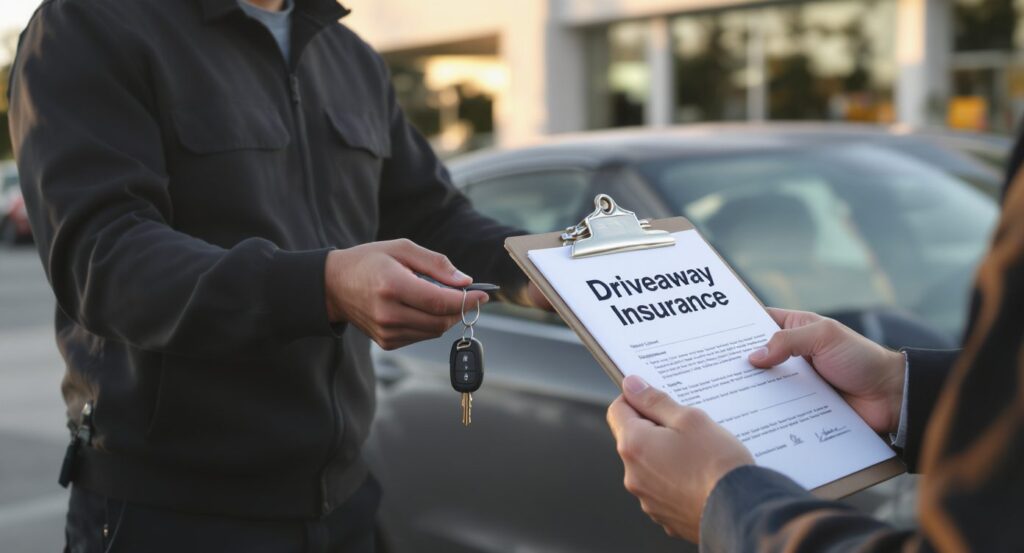
Driveaway insurance – sometimes called “drive-away” or “transit insurance” – is short-term coverage specifically designed for the trip between picking up the vehicle and getting it home (or to its final destination). It’s not comprehensive insurance for the long haul; it’s laser-focused on that risky limbo period when the car isn’t registered, titled, or added to your regular policy yet.
Most people think their current auto insurance “automatically” covers a newly purchased vehicle. Sometimes it does – for 7-30 days – but only if you’re replacing an existing vehicle on the same policy and you already have comprehensive/collision coverage. Buy an additional vehicle, a classic car, or something from a private seller? You’re almost certainly naked without separate driveaway insurance.
Dealers will happily sell you a 5-day “dealer driveaway tag” or binder, but those are bare-bones liability and often exclude collision altogether. Real driveaway insurance from a specialty carrier fills those massive gaps.
When You Absolutely Need Driveaway Insurance
You need it any time one of these applies:
- Buying out-of-state (most common scenario)
- Purchasing from a private seller
- Buying a classic, exotic, or high-value vehicle
- Hauling a project car or salvage-title vehicle
- Transporting a vehicle for someone else (friend, family, client)
- Your current policy has a “newly acquired vehicle” clause that’s too weak or non-existent
I move 15-20 cars a year for myself and clients, and I have never once skipped proper driveaway coverage after that deer incident.
The Trusted Driver Checklist – Print This Out, Seriously
Here’s the exact checklist I run through before I ever turn the key on a new-to-me vehicle. I keep it as a note on my phone and literally check boxes before pulling out of the seller’s driveway.
1. Verify Your Driving Record Is Spotless (or as Close as Possible)
Carriers pull your MVR (Motor Vehicle Record) instantly. Any major violations in the last 3-5 years (DUI, reckless driving, multiple at-fault accidents) will either skyrocket the rate or get you declined completely.
Pro tip: Run your own MVR through your state DMV a week before you buy. Fix any errors. I once had a ticket showing that was actually my brother’s – took two weeks to clear up.
2. Confirm All Drivers Are at Least 25 (Ideally 30+)
Under 25? Some carriers flat-out refuse. 25-29? Expect to pay 50-100% more. I always try to have a 30+ driver listed if possible – it can cut the premium dramatically.
3. Get the Policy Bound BEFORE You Take Possession
Never, ever drive off without the policy active. I email myself the declarations page and keep a PDF on my phone plus a printed copy in the glovebox. Screenshot the coverage page too – cell service dies at the worst times.
4. Choose Coverage Limits Wisely – Don’t Skimp Here
- Liability: Minimum 100/300/100 (I run 250/500/100)
- Collision/Comprehensive: Actual cash value or stated value (for classics)
- Deductible: $500-$1,000 is the sweet spot – lower deductibles cost way more premium for driveaway
I once saved $180 by going from a $250 deductible to $1,000 on a 1,200-mile trip. Worth it.
5. Double-Check Vehicle Value Matches Reality
Take photos of the odometer, VIN, and all angles before you leave. If the car is worth more than you told the insurer (common with private sales), you’re underinsured in a total loss.
I photograph everything like I’m documenting a crime scene. Has saved me twice when adjusters tried to lowball.
6. Confirm Route & Mileage Allowance
Most policies are “one-way direct route.” Detours for sightseeing or visiting grandma can void coverage if something happens off-route. Some carriers allow ±200 miles – ask.
7. Verify Towing & Roadside Assistance Is Included
Breakdowns happen. I’ve been stranded in New Mexico with a blown transmission. Having towing included meant the difference between a $1,200 tow bill and $0.
8. Add “Permissive Use” If Friends Might Help Drive
List every possible driver by name. “Any licensed driver over 25” sounds nice, but most driveaway policies require named drivers only.
Insider Tips From Someone Who’s Moved Over 200 Vehicles
Tip #1: Shop the Specialty Carriers – Not Your Regular Agent
The best rates I’ve ever gotten came from:
- Haggerty DriveAway
- Condon Skelly Transit Coverage
- J.C. Taylor
- American Collectors
- Grundy (my personal favorite for classics)
Regular agents usually quote double what these guys charge because they don’t understand the niche.
Tip #2: Buy Annual “Transporter” Policies If You Move Cars Often
If you buy/flip/trade more than 3-4 cars a year, look into annual transporter or garage-keepers policies. I pay about $1,100/year for $200k coverage that lets me drive unlimited personal purchases. Pays for itself after two trips.
Tip #3: Weekdays Are Cheaper Than Weekends
Quotes on Friday afternoon or Saturday are often 20-40% higher because that’s when everyone buys cars. Quote on Tuesday or Wednesday morning for the best rates.
Tip #4: Use Stated Value for Classics, Agreed Value if Possible
“Actual cash value” means they pay whatever Kelley Blue Book says. Stated value means you and the insurer agree upfront. I always fight for stated value with plenty of photos and receipts.
Tip #5: Never Lie About the Route Distance
They use Google Maps. I once told them 1,100 miles when it was actually 1,400. Claim time came (minor fender bender), and they tried to deny because of “material misrepresentation.” Settled eventually, but it was a nightmare.
Real Stories From the Road (That Could Have Ended Very Differently)
Story 1 – The $28,000 Lesson My buddy bought a 1970 Chevelle in California, planning to drive it to Michigan. He “saved” $240 by skipping collision coverage. Hit black ice in Colorado, totaled the car. No collision = $0 payout. Still owes the bank $28k on a car that no longer exists.
Story 2 – The Deer That Almost Cost Me Everything My 4Runner story. I had liability only. Deer totaled the front end. Repair bill: $9,800. My regular insurance denied because it was a “newly acquired vehicle not added to policy.” Had to pay out of pocket. That single incident is why I now over-insure everything.
Story 3 – The One Time Everything Went Right Picked up a Porsche 911 in Florida for a client. Paid $380 for full coverage (stated value $145k) with $500 deductible. Transmission failed in Alabama. Towing, rental car, and repair coverage all kicked in perfectly. Total out-of-pocket: $500 deductible. Client was thrilled, I kept my reputation.
Common Mistakes That Will Cost You Thousands
- Assuming dealer “driveaway tags” include collision (they usually don’t)
- Forgetting to list all drivers
- Under-valuing the vehicle to save premium
- Driving with expired license or suspended insurance history
- Taking scenic routes without telling the carrier
- Not reading the exclusions (theft while unattended is a big one – always lock it)
How to Get the Best Rate on Driveaway Insurance Right Now
- Gather everything upfront:
- VIN
- Exact pickup & delivery addresses
- Photos of the vehicle
- Driver licenses for everyone driving
- Estimated value with proof (auction sheet, receipts, etc.)
- Call 2-3 specialty carriers on a Tuesday morning.
- Ask specifically: “What’s your best rate for a one-way transit policy with $____ stated value?”
- Be honest about everything – they will find out.
I can usually get bound in under 15 minutes when I have my ducks in a row.
Frequently Asked Questions About Driveaway Insurance
How much does driveaway insurance typically cost for a cross-country trip?
For a regular car worth $30,000-$60,000 over 1,000-2,000 miles, most people pay between $250 and $650 with full collision and $500-$1,000 deductible. High-value or classic cars push it toward $800-$1,500. The biggest factors are the vehicle’s agreed value, total miles, and your driving record. I’ve seen clean-record drivers with a $40k car pay $290 for a 1,800-mile trip and the exact same trip quoted at $540 for someone with a recent ticket.
Can I buy driveaway insurance online instantly, or do I have to call?
Some specialty carriers (especially the big collector ones) still want you to call or email because they underwrite each trip manually. A couple of brokers and smaller providers now offer true instant online quotes and bind – you upload the bill of sale, driver’s license, and VIN photos, and you’re covered in minutes. If you’re picking up the car the same day, always start the process early in the morning; online systems sometimes shut down after 5 p.m. Eastern.
How long is a normal driveaway policy issued for?
Most are written for the exact number of days you request – anywhere from 3 to 30 days. The sweet spot people choose is 7-14 days because it gives buffer for weather, breakdowns, or just wanting to take an extra day without stress. Anything over 30 days usually flips into a different (and more expensive) product.
What happens if the trip takes longer than planned – can I extend the policy mid-trip?
Yes, almost every carrier allows extensions, usually with just a phone call or email and an additional premium (pro-rated). I’ve extended policies from hotel parking lots with a dying transmission – they just add the days and email the new dec page. Do it before the original policy expires, or you’re uninsured the moment it lapses.
If I’m buying from a dealer instead of private seller, do I still need separate driveaway insurance?
Dealers almost always give you a temporary tag (5-30 days depending on state) with bare-minimum liability, but almost never collision or comprehensive. If the car is worth more than pocket change, that dealer binder leaves you completely exposed for physical damage. I’ve seen dealers swear “you’re fully covered” – you’re not. Always get your own policy anyway.
Does driveaway insurance cover me if I’m pulling a trailer or towing something?
Standard one-way transit policies are for the vehicle you’re moving only. Towing a trailer, boat, or another car behind usually requires an endorsement or separate coverage. Some carriers flat-out exclude any towing, others add it for $50-$150 extra. Tell them upfront – getting caught towing without the endorsement will deny the claim.
Can I get driveaway insurance with an international driver’s license?
Yes, most specialty carriers accept a valid foreign license + international driving permit for short transit trips. They treat you like any other driver – same pricing, same underwriting. I’ve moved cars for Canadian, UK, and German buyers without issue. Just have your passport and license ready when you apply.
If I decide to ship the car instead of driving it, do I still need driveaway insurance?
No – that’s completely different coverage called inland marine or transporter insurance, which the shipping company carries. Driveaway insurance is strictly for when you or someone you know is behind the wheel. If you change your mind and ship it, just cancel the driveaway policy (most give full refund if you haven’t started the trip yet).
Don’t Be the Cautionary Tale
Driveaway insurance isn’t exciting. It’s not sexy. But the peace of mind knowing that one wrong move won’t bankrupt you? That’s priceless.
I still get butterflies every time I pick up a new car, but now they’re pure excitement – because I know I’m covered properly.
Print the checklist, save this article, and never hit the road without proper driveaway insurance again. Your future self (and your bank account) will thank you.
Safe travels, and see you on the road.
For more useful articles, visit my website: Mywebinsurance.