
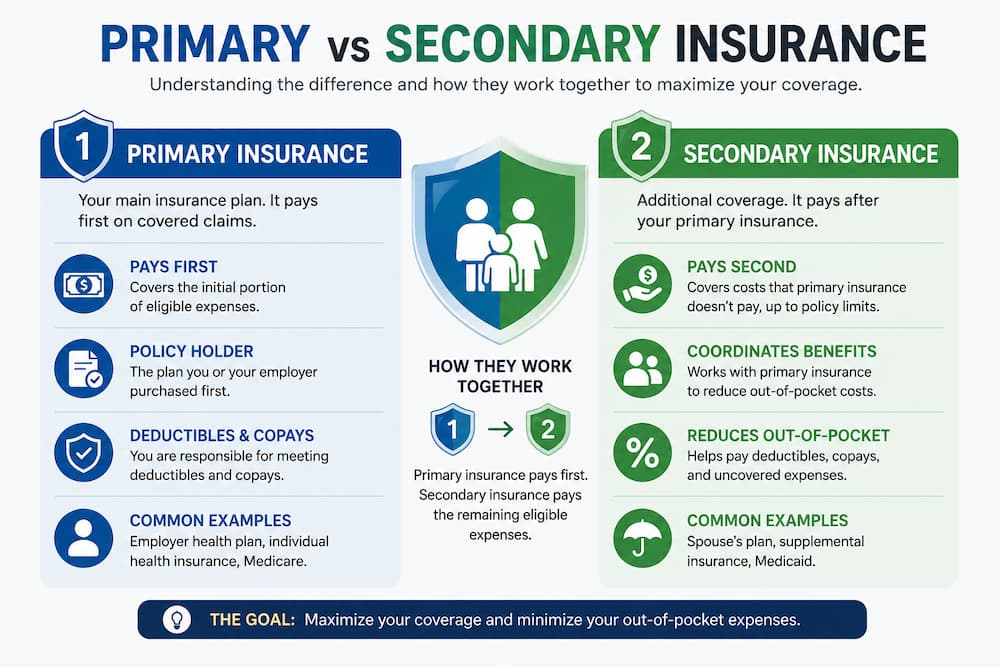
If you have two or more health insurance policies, it may be unclear which one pays first, and what happens with the remaining expenses. This is where the primary insurance vs secondary insurance comes about. If you have two health insurance plans, the primary plan would process the claim first. The secondary insurance can then cover some of the applicable costs that are left.
Understanding Primary vs Secondary Insurance
Primary and secondary insurance differ in that the primary plan is the first to cover the health care claim, while the secondary plan is the last to cover it. The two types of insurance are Primary Insurance and Secondary Insurance. Primary Insurance is the first insurance that gets paid before Secondary Insurance is paid. Insurance companies have their own coverage rules, and they may also have their own deductible, as well as their own cost sharing.
How Primary and Secondary Coverage Work Together
The primary insurance provider will examine the service and decide what they will pay for based on your insurance policy. Once the primary insurance has determined the claim, the secondary insurance may be considering the rest of the coverage available. It then follows its own policy. It is called coordination of benefits. It can be used to identify the insurance that pays first and how multiple insurance policies work together. The secondary plan is not a plan that merely covers the balance that the primary insurance company does not cover.
What is COB?
Coordination of benefits is the mechanism that is in place when you have more than one health insurance plan. It sets the order of insurance companies in the claim settlement process.
It helps determine:
- Which is the most important insurance?
- Which insurance is secondary.Which insurance is secondary.
- What is the first step in which plan?
- How the payments are coordinated
- What costs can still be claimed if you are eligible
If you have primary and secondary health insurance, your primary and secondary health insurers may request information regarding your other health insurance. This is because maintaining the information up to date will help avoid the delays of claims.
When Can You Have Two Health Insurance Plans?
There are a number of circumstances where it is possible to have two health insurance plans. You may be covered by your employer, as well as your spouse’s employer plan. In some cases, children can be covered by both parents. For instance, Medicare and other health insurance plans. The priority of insurance coverage coverage might differ depending upon circumstances. If you’re not certain regarding coverage sequence, call both insurance firms for verification. The information below should help you determine which your primary health insurance might be. When determining the primary health insurance, don’t assume that the older insurance or the lower cost one is the primary insurance. Order may be based on job, family coverage, Medicare and more. Your insurance companies can verify if you have a primary and secondary plan of insurance. Your health care provider may also require information from both policies prior to making a claim.
Can Secondary Insurance Cover Your Deductible?
One often asked question is whether or not the secondary insurance pays for the primary deductible. Not automatically. Some eligible expenses can be covered by a secondary plan, depending on the policy terms, the primary plan will be used to cover some of the expenses. Deductibles, copayments, coinsurance and covered services vary from one insurance plan to another. Hence, it is imperative to review the secondary policy before taking it for granted that your primary deductible will be covered.
Will Secondary Insurance Pay Remaining Medical Costs?
There is a common question of whether secondary insurance would cover for any amount not covered by the primary insurance. Not necessarily. Some eligible expenses may be covered after the primary insurance plan has paid a claim, and may be covered by secondary insurance. However, it considers those costs based on its coverage rules. The secondary policy may exclude certain costs and/or may have a deductible or cost sharing requirement.
Can You Have Multiple Health Insurance Policies?
Yes, in some cases, you can have two health insurance plans. For instance, your employer might provide coverage for you and you could also be covered by your spouse’s employer’s plan. It may be that both parents also cover their child. Having several policies can add coverage but it can also have a more complex claims process. It’s important to understand the primary and secondary plan as well as the coordination of benefits with health insurance.
Do You Have to Pay Two Insurance Premiums?
If you have two health insurance policies you might be required to pay premiums for both insurance policies. Two health care plans does not necessarily reduce health care costs. Examine the costs, deductibles, co-payments, co-insurance, and coverage of both plans.
What to Check When You Have Two Insurance Plans
If you have Primary and Secondary cover, these are to be double checked:
- Which plan should be most important?
- Which plan is the secondary plan?
- Deductibles
- Copayments and coinsurance
- Provider networks
- Coverage limits
- Exclusions
- Prior authorization requirements
- Out-of-pocket maximums
- Coordination of benefits rules
Final Thoughts
If you have multiple health insurance policies, it’s essential to know what primary insurance is and what secondary insurance is. Typically, primary insurance will settle the claim first and secondary insurance will take care of the expenses that fall under their coverage if they are applicable. But, secondary coverage doesn’t cover all amounts due from the primary insurance company. If you have two health insurance policies, check both policies and update insurance information. Understanding primary and secondary insurance coverage and coordination of benefits can make the claims process easier to comprehend.
Frequently Asked Questions
What are the differences between primary and secondary health insurance?
Most often, primary insurance will handle the medical claim first, and secondary insurance will do the same, but only after the primary insurance and may cover remaining expenses that are eligible under the medical plan.
How does secondary insurance work?
Secondary insurance assesses a claim following the primary insurance.
Do you have more than one health insurance policy?
Yes. Some may be covered by two plans, for example, by their own employer and that of their spouse.