
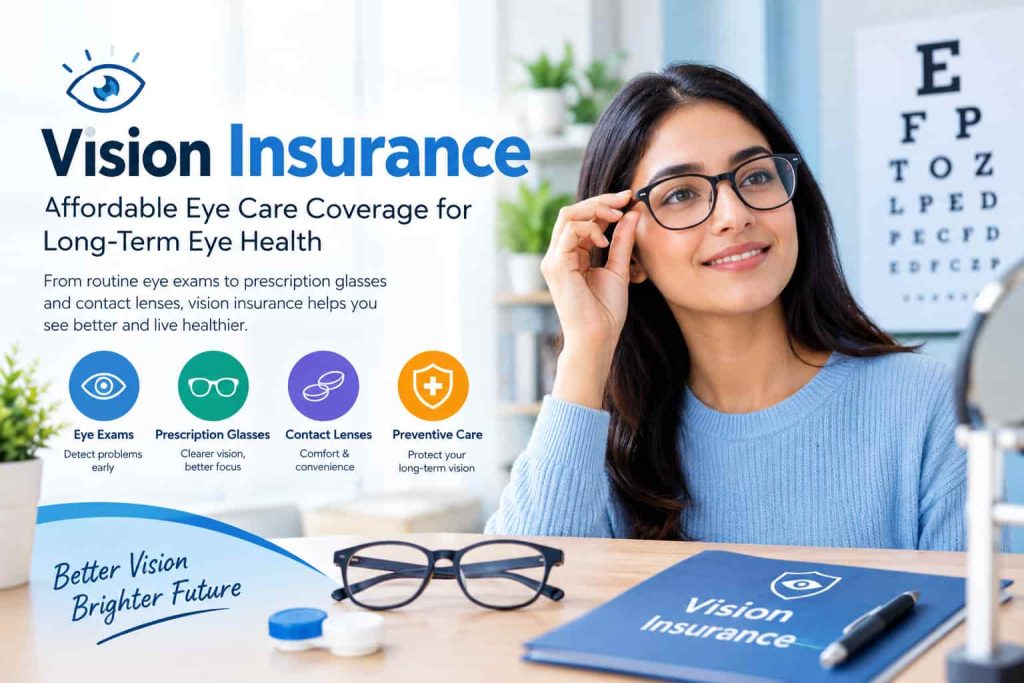
Your vision can have an impact on virtually every aspect of life. You’ll find it easier and more comfortable to do everything from hours in front of a computer to driving, reading, or assisting your children with their schoolwork with healthy eyesight. However, many people are more concerned with Health Insurance and don’t think about the continued expenses of eye care. But, with Vision Insurance, you can lower those costs and vision care is more affordable.
In the digital age, eye health is getting more and more significant. The need for preventive eye care is rising due to increased usage of screens, aging of the population and the rise in the prevalence of visual issues. It has been proven that millions of people globally suffer with impaired vision which is often preventable and/or manageable by attending regular eye examinations and receiving timely treatment. With Vision Insurance you get access to those services while helping to manage your out-of-pocket costs.
What Is Vision Insurance?
Vision Insurance is a kind of insurance to aid with regular eye care. A Vision Insurance plan normally contains benefits for eye exams, prescription glasses, contact lenses and other services related to the vision. No matter if you have to pay for these services in full or the insurance plan helps to reduce costs by providing an allowance, discount or benefit, you are helping to cut down on your costs.
Vision Insurance is different from traditional Health Insurance because it emphasizes preventive eye care and corrective eyewear instead of medical treatments and emergencies. Having periodic eye exams may catch vision disorders early and find out some diseases in their early stages before they can cause problems.
Why Vision Insurance Matters
There are many eye diseases that can develop slowly, and may have no symptoms in the early stages. The time that vision problems are evident may make treatment more costly or complicated. Regular eye exams can identify problems at an early stage, and prevent them from impacting your life.
During comprehensive eye exams, eye doctors can also detect eye care issues that may be indicative of a wider health problem. Diabetes, high blood pressure and some neurological diseases may display some early signs with changes to the eyes. It’s important for eyes to be cared for regularly, not only for vision health, but for general wellness as well.
How Vision Insurance Works
With a Vision Insurance plan, the insurance company requires you to pay a monthly or annual premium and in return, receive coverage. Typically, most plans offer benefits for regular eye exams, and financial assistance for glasses, frames, lenses or contact lenses.
This will depend on the type of policy and the provider. Some plans have networks of providers that provide members lower costs for services. Some others can return a certain amount of expenses for which they may be eligible. Knowing the coverage benefits of your plan can help you get the most from your coverage.
What Does Vision Insurance Cover?
Most Vision Insurance plans include a comprehensive eye exam which will check the condition of a person’s vision and if necessary, the insurance will pay for any updates on prescription. Many plans also will cover eyeglass frames, prescription lenses, enhancements, and contact lenses. A few Vision Insurance plans will cover specialty lenses, coatings, and state-of-the-art lenses. Each insurance provider has different benefits, allowances and restrictions so be sure to check the policy details prior to signing up for the policy.
Vision Insurance for Families
It is crucial to get vision care at any age. Children can be helped by regularly checking their vision, as vision problems can impact learning and reading and on the job performance in classrooms. Prescription Eyeglasses are a necessity for adults who need them for work, driving and daily activities, and older adults experience vision changes due to our age and need regular check-ups.
Family Vision Coverage can help alleviate the cost of routine eye exams for more than one person in the family. Routine eye exams and proper eyeglasses help the entire family maintain a better vision.
Vision Insurance and Preventive Eye Care
One of the best benefits of Vision Insurance is the ability to do preventive care. Annual eye exams will detect changes in vision before they result in a major issue. Early diagnosis may result in better subsequent care and prognosis. Preventive eye care is still a topic of discussion for health organisations all over the world. Regular eye exams and proper care can help to enhance quality of life, workplace productivity, school outcomes and health.
Vision Insurance vs Health Insurance
Many people think that Health Insurance will take care of everything concerning their eyes but this isn’t always true. The Health Insurance is primarily dedicated to eye diseases, surgeries, injuries and treatments for disease. Vision Insurance is for routine eye exams, prescription eyeglasses, contact lenses and preventive vision care. These two options of coverage combined offer a more thorough eye health and healthcare coverage.
Benefits of Vision Insurance
The most important advantage of Vision Insurance is saving money. At times, eye check-ups, eyeglasses and contact lenses can be costly. Covering those expenses less frequently, and with the help of coverage, it becomes more affordable for people to get their eyes taken care of.
Again, Vision Insurance has a tendency to promote regular eye care. People are more likely to take advantage of preventive services if they are readily available and are able to schedule an exam each year and catch vision issues before they become more serious. Improved vision can lead to increased productivity, safety, comfort and quality of life.
How to Choose the Right Vision Insurance Plan
You’ll need to consider your eye care needs, budget and family needs in order to select the right plan. Some plans offer better eyewear coverage, others emphasize more preventive services and coverage for providers.
When choosing a policy, ensure you have the following things in mind: premiums, annual benefits, network vs. no network, lens coverage, contact lens coverage, and plan value. The ideal Vision Insurance plan is the one that suits you and your personal health care objectives and projected eye care costs.
Vision Insurance and Long-Term Eye Health
Good eye health needs to be taken care of all one’s life. Vision changes may happen slowly and progressively as a result of lifestyle, medical conditions, age or genetics. Regular check-ups can help catch vision issues as early as possible and enable them to be managed. By promoting regular eye care and making it more affordable, Vision Insurance helps to ensure long-term eye health. Routine eye care is a vital part of your health and well-being and can help save one of your most precious senses your vision!
Conclusion
Vision Insurance is a crucial part of the health care system in making eye care more affordable and accessible. Whether it’s your regular eye exam, glasses or contact lenses, or preventive care, vision coverage will help ease expenses and help maintain healthy eyesight. If you wear corrective lenses, have a family history of vision issues, or simply want to safeguard eye health for the long run, having Vision Insurance can give you much monetary protection and relaxation.
Frequently Asked Questions
What is Vision Insurance?
A specific insurance coverage that assists with normal eye care costs, such as eye exams, prescription glasses, contact lenses and various other vision costs.
Is the cost of contact lenses paid for by Vision Insurance?
Many plans provide coverage for contact lenses, but this coverage may vary in terms of the maximum amount and annual limits for the benefits.
But why is Vision Insurance important?
Vision Insurance lowers the cost of eye care, promotes preventive eye care, promotes eye health over long-term and enhances access to essential vision services.